






Rev. Jesse Jackson: The relentless drumbeat of justice
|
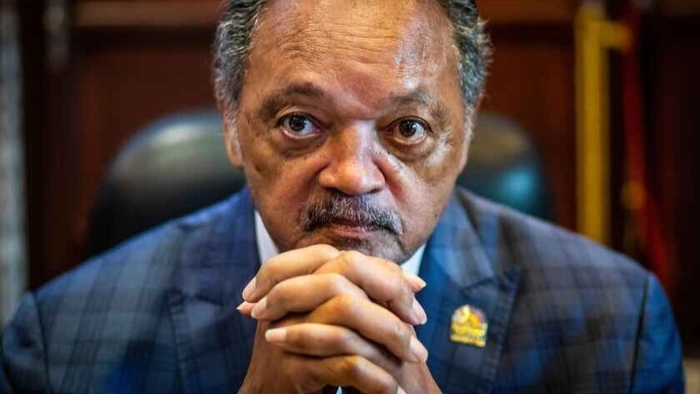
Posted By: Joel Savage on February 19, 2026 A powerful look at Rev. Jesse Jackson’s lifelong fight for justice, equality, and civil rights, highlighting his enduring impact on American social progress. Photo credit: chicago.suntimes.com There are figures whose lives cannot be measured in years, but in the tremors they leave behind. Jesse Louis Jackson was one of them. His death at 84 does not silence his voice; it simply reminds us how deeply it had already entered the bloodstream of American history. Jackson was not a man who waited for justice to arrive; he chased it, confronted it, demanded it, and carried millions with him along the way. He rose from the segregated South with a clarity of purpose that never dimmed. Long before he became a national figure, Jackson understood that the struggle for Black dignity required more than outrage; it required organization, discipline, and a refusal to accept the limits imposed by a hostile society. When he joined Dr. Martin Luther King Jr. in the 1960s, he was not merely a young activist seeking direction; he was a force in formation. The night King was assassinated in Memphis, Jackson was there, and the weight of that moment shaped the rest of his life. He stepped forward not as a replacement for King, no one could be, but as a man determined to keep the movement alive. Jackson’s genius was his ability to turn protest into an institution. Operation PUSH and later the Rainbow Coalition were not slogans; they were engines of empowerment. He built bridges across race, class, and ideology, insisting that the poor, the marginalized, and the forgotten had a place in the American story. His famous affirmation, “I am somebody,” was more than a chant. It was a declaration of existence for people whom society had tried to erase. His presidential campaigns in 1984 and 1988 were watershed moments. Jackson shattered the myth that America was not ready to take a Black candidate seriously. He won states, delegates, and hearts, proving that political imagination could be expanded. Many of the coalitions that later helped elect the first Black president were first assembled by Jackson, who dared to run when the odds were stacked against him. He made the impossible seem inevitable. However, Jackson’s reach extended far beyond American borders. He negotiated the release of hostages in Syria, Cuba, and Iraq. He stood with anti‑apartheid leaders when doing so was politically inconvenient. He spoke in Paris, London, Johannesburg, and countless cities where people recognized in him a moral authority that transcended nationality. In 2021, France awarded him the Légion d’honneur, acknowledging a lifetime spent confronting racism and injustice wherever they appeared. Even as illness tightened its grip, first Parkinson’s disease, then progressive supranuclear palsy, Jackson refused to retreat from public life. He kept showing up: at rallies, at churches, at union halls, at vigils. His body weakened, but his conviction never did. His family described him as a “servant leader,” and that is perhaps the most accurate portrait of the man. He served not for applause but because he believed deeply in the humanity of those who had been denied it. Jesse Jackson’s legacy is not a closed chapter. It is a living inheritance. He taught that justice is not a moment but a movement, not a slogan but a lifelong discipline. He reminded the world that the fight for the emancipation of the Black man is inseparable from the fight for the emancipation of all people. He showed, through decades of unbroken commitment, that hope is not naïve; it is necessary. His passing on Tuesday, February 17, leaves a void, but it also leaves a map. The road he walked is still before us, and the drumbeat he kept, steady, insistent, unafraid, continues to echo. Jesse Jackson did not simply witness history. He bent it toward justice. Read more: https://juskosave.blogspot.com/2026/02/rev... If you enjoyed this article, Join HBCU CONNECT today for similar content and opportunities via email! |
 |
Joel Savage
Freelancing, Antwerp Province Member Since September 2013 |
Comments
More From This Author
Latest News





Popular News



 |
North Carolina HBCU Unity DayShaw University - Elizabeth City State University - Johnson C. Smith University - Fayetteville State University - Livingstone College - North Carolina A&T State University - North Carolina Central Uni ...more
Reginald Culpepper • 104,385 Views • August 8th, 2016 |


